
Teaching yoga is more than demonstrating poses and guiding students through movements. It is about creating a welcoming space where people can connect with their bodies, build confidence, and enjoy their practice.
Vinyasa yoga teaching requires a balance of movement, breath awareness, clear instructions, and personal connection. Whether you are a new teacher or an experienced practitioner, developing the right skills can help you lead meaningful classes and inspire students to grow with every session.
Build a Strong Foundation in Your Yoga Practice
Before teaching others, focus on building a strong personal practice. Learn proper yoga postures, body alignment, and safe modifications to guide students confidently. Practice breath awareness and understand how each movement connects with breathing.
Regular practice also helps improve strength, balance, and flexibility. Pay attention to your body’s responses and learn from your challenges. A strong foundation will help you understand student needs and become a more confident, supportive yoga teacher.
Learn to Create Balanced and Meaningful Sequences
A well-planned class helps students move comfortably from one pose to another. Good vinyasa yoga teaching depends on understanding how movements connect and how each sequence supports the overall class experience.
Vinyasa yoga sequencing involves arranging poses in a logical order while maintaining a natural connection between breath and movement. Each class should have a clear purpose, whether you want students to improve flexibility, develop strength, or release tension.
Keep these points in mind when planning your sequences:
- Start with gentle movements: Give students enough time to warm up their bodies.
- Build gradually: Move from simple postures to more challenging movements.
- Create smooth transitions: Make sure each pose connects naturally with the next.
- Include resting moments: Allow students to pause and notice their breathing.
- End with relaxation: Finish the session with a calming posture such as Savasana.
Avoid making every class feel the same. Introduce small variations to keep students interested while maintaining a familiar structure.
At Salty Pranas, the philosophy of mindful yoga and mindful life encourages practitioners to carry awareness beyond the yoga mat. Bringing this idea into your classes can help students develop a deeper connection with their practice and daily routines.
Develop Clear Communication Skills
Good communication helps students follow your instructions with confidence. Use simple language when explaining poses and transitions. Break movements into smaller steps so beginners can understand them easily. Give clear instructions about body alignment and breathing, and allow students enough time to follow each movement.
You can improve your communication by:
- Speaking clearly and at a comfortable pace.
- Avoiding complicated yoga terms.
- Giving clear instructions before each pose.
- Repeating important alignment cues.
- Using a calm and encouraging tone.
Your words should make students feel supported, comfortable, and motivated throughout the class.
Understand Different Student Needs
Every student enters a yoga class with different abilities, experiences, and expectations. Some may have practiced for years, while others may be attending their first session.
An effective teacher understands these differences and makes classes accessible to everyone.
Start by observing your students. Notice their comfort levels, movement patterns, and ability to follow instructions. Offer modifications when a posture feels too challenging.
Here are some ways to make your classes more inclusive:
- Offer easier variations: Provide beginner-friendly options for challenging poses.
- Respect physical limits: Never encourage students to push through pain.
- Use props when needed: Blocks, straps, and bolsters can improve comfort and stability.
- Encourage individual progress: Remind students that their practice does not need to look like anyone else’s.
- Create a welcoming environment: Make sure everyone feels comfortable asking questions.
A supportive classroom allows students to explore their abilities without worrying about judgment. This can improve their confidence and encourage them to continue practicing.
Improve Your Understanding of Breath and Movement
Breathing plays an important role in yoga. Teach students how to coordinate their breathing with each movement. Generally, inhaling supports body extension, while exhaling helps with folding and deeper movements.
Focus on these teaching practices:
- Encourage slow and steady breathing.
- Guide students through smooth transitions.
- Remind them not to hold their breath.
- Allow pauses when needed.
- Connect breathing with mindful movement.
In Vinyasa flow yoga, every movement should follow a natural breathing rhythm. This helps students practice with better awareness and control.
Create a Teaching Style That Feels Natural
Your teaching style should reflect your personality and experience. You do not need to copy other teachers. Try different approaches, explore creative sequences, and find what feels comfortable for you.
You can develop your teaching style by:
- Be yourself: Let your personality guide your classes.
- Use meaningful themes: Focus on balance, patience, or self-awareness.
- Stay flexible: Adjust your approach to students’ needs.
- Keep learning: Explore new techniques and ideas.
A natural teaching style helps students connect with you and makes your classes more enjoyable.
Follow a Practical Yoga Teaching Methodology
A successful yoga class needs more than a good sequence. It requires planning, preparation, observation, and thoughtful guidance.
A clear Yoga teaching methodology helps you manage the complete class experience, from welcoming students to guiding them through relaxation.
Consider following this simple structure:
- Welcome and Preparation
Start by greeting students and helping them settle into the space. Briefly explain the class focus and encourage everyone to become aware of their breathing.
- Warm-Up
Introduce gentle movements that prepare the body for the main practice. Avoid starting with difficult postures before students are ready.
- Main Practice
Guide students through the planned sequence. Give clear instructions, demonstrate movements when necessary, and offer modifications.
- Cool-Down
Gradually reduce the intensity of the session with gentle stretches and slower movements.
- Final Relaxation
End with Savasana or another comfortable resting posture. Give students a few quiet moments to relax and notice how they feel.
Following a consistent structure makes your classes easier to manage. You can still introduce creative sequences while maintaining a comfortable flow.
Keep Learning and Expanding Your Knowledge
Becoming a good yoga teacher requires continuous learning. Attend workshops, practice with experienced teachers, and explore different yoga styles to improve your skills. Learning about anatomy, alignment, and mindfulness can also strengthen your teaching approach.
Consider advanced training, such as a 300 hour ytt bali program, to deepen your practice and explore new teaching techniques. Observe other instructors, accept feedback, and keep improving your knowledge with regular practice.
Build a Strong Connection With Your Students
Students are more likely to enjoy returning to a class when they feel comfortable and valued. Building genuine relationships can make your teaching more meaningful.
Take time to learn students’ names and understand their general experience levels. Ask how they feel after class and encourage them to share feedback.
As a Vinyasa yoga instructor, you should focus on creating an environment where students feel safe, respected, and motivated.
You can strengthen this connection by:
- Welcoming new students and helping them feel included.
- Offering encouragement without comparing individual progress.
- Listening carefully when students share concerns.
- Celebrating small improvements and personal achievements.
- Creating space for questions and open communication.
Remember that inspiration does not always come from giving motivational speeches. Sometimes, a simple word of encouragement or a thoughtful adjustment to the class can make a lasting difference.
Inspire Students Beyond the Yoga Mat
Yoga teaches patience, balance, and self-awareness that students can apply in daily life. Encourage them to practice mindfulness, manage stress, and make time for themselves. Include simple breathing exercises or short reflection activities in your classes.
Keep these moments natural and meaningful. Help students understand that yoga is not just about physical movements but also about building healthier habits, improving awareness, and supporting personal growth beyond the mat.
Become a More Confident Yoga Teacher With Salty Pranas
Becoming an inspiring teacher takes practice, patience, and a willingness to keep learning. From planning balanced sequences to understanding student needs, every small improvement can make your classes more meaningful.
Strong vinyasa yoga teaching skills help you guide students with confidence while creating a supportive space for personal growth. Explore the yoga learning opportunities at Salty Pranas and take the next step toward becoming a more knowledgeable, confident, and inspiring yoga teacher.
Key Takeaways:
- Build a strong personal yoga practice to teach with confidence.
- Create balanced sequences with smooth transitions and proper breathing.
- Use clear instructions and simple language to guide students.
- Understand different student needs and offer suitable modifications.
- Develop a natural teaching style that reflects your personality.
- Continue learning through workshops, practice, and advanced training.
- Create a welcoming environment where students feel supported and motivated.
Frequently Asked Questions:
1. What are the essential skills needed to become a good Vinyasa yoga teacher?
A good teacher needs strong yoga knowledge, clear communication, sequencing skills, breath awareness, and the ability to understand different student needs.
2. How can I improve my Vinyasa yoga teaching skills?
Practice regularly, plan balanced sequences, attend workshops, observe experienced teachers, and ask students for feedback.
3. How do I create an effective Vinyasa yoga sequence?
Start with gentle warm-up movements, gradually introduce challenging poses, include smooth transitions, and finish with relaxation.
4. How can I make my yoga classes more engaging for students?
Use clear instructions, introduce creative sequences, offer pose modifications, and create a welcoming environment where everyone feels comfortable.
5. Why is advanced yoga teacher training important?
Advanced training helps teachers deepen their yoga knowledge, improve teaching techniques, explore new practices, and become more confident instructors.
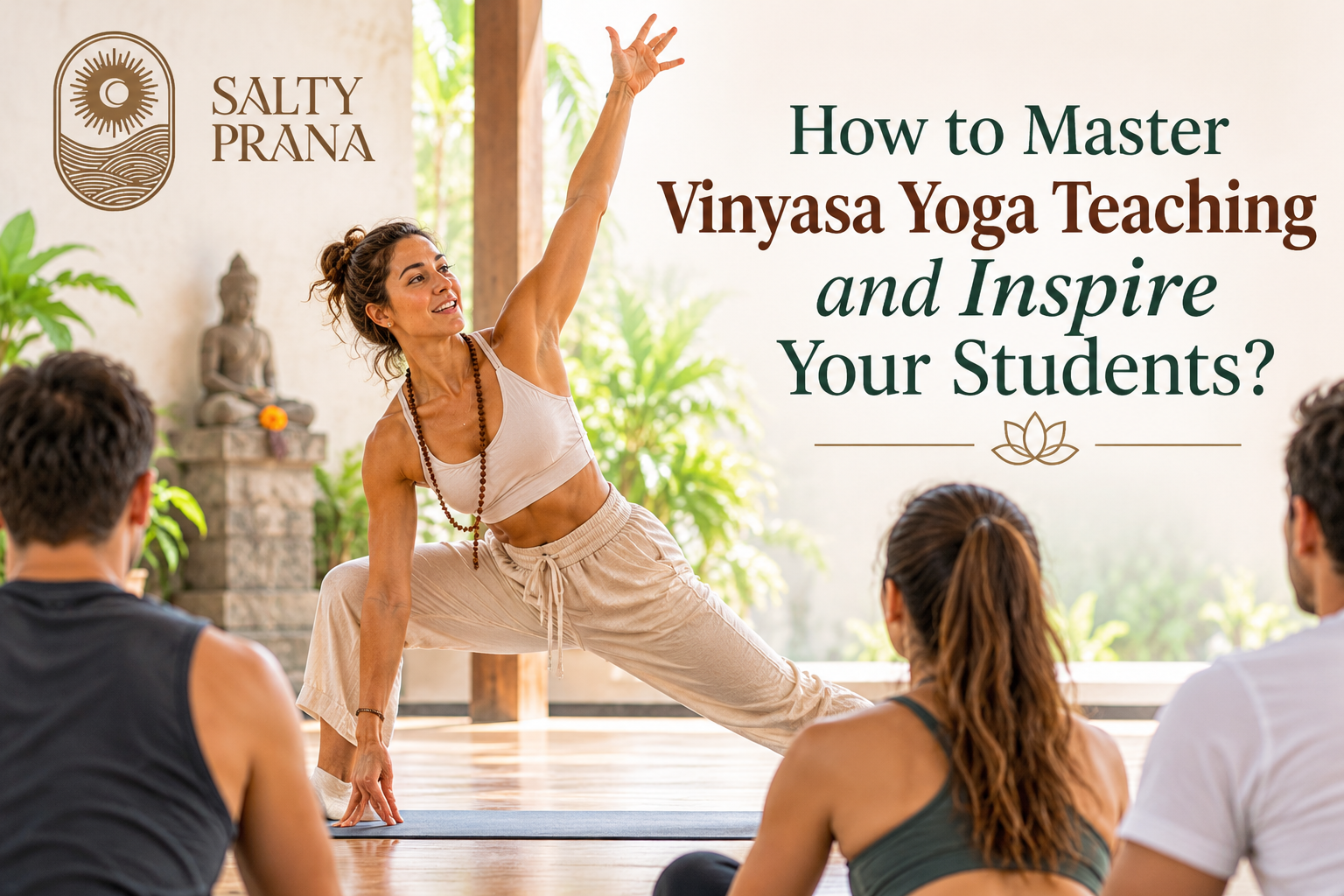
How to Master Vinyasa Yoga Teaching and Inspire Your Students?

We're Celine & Benny
Hello! We're Celine and Ben the founders of Salty Prana Retreat Centre. Our paths crossed years ago on a yoga mat, just like the one you might be standing on today. Since then, we've traveled the world, learning, teaching, and soaking in every bit of wisdom this ancient practice has to offer.
With over a decade of experience between us, we've poured every ounce of our knowledge, heart, and soul into creating a unique teacher training that's more than just a course—it's an absolute transformation. For both those who want to teach Yoga and those who just want to learn more about themselves. We believe in yoga's power to change lives because it's changed ours. We're not just instructors; we're your supporters, and your biggest cheerleaders.
We've built this program to share with you not just the techniques and poses but the deeper essence of yoga—a path to inner peace, confidence, and a fulfilling life.
Here's why you can rely on us:
Meet the Hearts Behind the Training

Shared Wisdom from 10,000+ Hours in the Studio
Two Decades Guiding Yoga Journeys
Guided Over 200 Yoga Teachers to Success
Retreat Center and Yoga Studio Owners In Bali
Personal, Hands-On Teaching Approach

Join Our Worldwide Community
We believe the real journey starts when you step off the mat and into the world as a yoga teacher. That's why our support extends far beyond the last day of training.
We offer ongoing mentorship to help you navigate the challenges and opportunities that come with teaching yoga. Whether it's refining your teaching style, finding your unique voice, or building your yoga business, we're here for you. Our community is your community, a network of fellow graduates and yoga enthusiasts who support, share, and grow together.
A community for life
choose your training

Our amazing designer, Amy, is giving the Salty Prana community (you!) an exclusive $100 voucher to spend in the Yogi Web store - use it to purchase a website template or custom design, including the $99 mini website in the store!
Love our website?

