
Teaching Vinyasa flow is about more than guiding students through yoga poses. It means connecting movement with breath, creating smooth transitions, and helping students stay present throughout the practice.
A well-designed class can build strength, improve flexibility, and provide space for mental relaxation. Whether you are a new instructor or an experienced teacher, the right approach can make your sessions more engaging.
By balancing active movements with mindful pauses, you can create classes that help students feel energized, comfortable, and connected to their practice.
What Makes a Vinyasa Flow Class Mindful and Dynamic?
A mindful Vinyasa class combines flowing movements with steady breathing and body awareness. As a teacher, focus on a natural rhythm rather than speed, using short pauses to help students reconnect with themselves.
Exploring a 50hr yin yoga teacher training in Bali program can show how slower practices complement dynamic yoga. Remind students that mindfulness is about being present, respecting their limits, and enjoying the practice rather than perfecting every pose.
How Can You Plan a Balanced Vinyasa Sequence?
A well-planned sequence helps students move safely between poses and allows you to teach with confidence.
Follow these steps when planning your class:
1. Start Gently: Begin with seated poses, easy stretches, and breathing exercises to prepare students.
2. Build Warmth: Introduce Cat-Cow, Low Lunge, and Sun Salutations to warm up major muscle groups.
3. Build Strength: Include standing poses, balance exercises, and strength-building movements that match your class goals.
4. End Slowly: Guide students through gentle stretches and restorative poses before final relaxation.
A 50hr yin yoga teacher training Bali experience can introduce ideas for adding slower stretches to active sessions. Yin Yoga teacher training Bali may also help teachers explore stillness and sustained poses, while 200 hour yoga teacher training retreats can provide a foundation in sequencing and teaching techniques.
How Do You Connect Breath With Movement?
Breathing gives Vinyasa flow its rhythm. When students coordinate each movement with an inhale or exhale, their practice can feel more focused and controlled.
Instead of giving long explanations, use short cues that students can follow easily.
- Inhale: Lift the arms, lengthen the spine, or open the chest.
- Exhale: Fold forward, twist gently, or move deeper into a comfortable pose.
- Pause: Allow a natural breath in balancing poses when needed.
- Reset: Encourage students to return to steady breathing if they feel rushed.
Not every movement needs to match a strict breathing pattern. Beginners may need extra time to understand the sequence, so permit them to move at their own pace.
Avoid asking students to hold their breath during challenging movements. Encourage natural breathing and remind them that they can rest whenever necessary.
How Can You Create Smooth and Safe Transitions?
Transitions help connect individual poses into one continuous practice. When students understand how to move between positions, they can focus more on their breathing and body awareness.
Try these teaching techniques to improve transitions:
Demonstrate the movement: Show unfamiliar transitions before asking students to follow along. Clear demonstrations can reduce confusion.
Give simple alignment cues: Explain where to place the hands and feet without overwhelming students with too many instructions.
Offer suitable modifications: Suggest easier variations and remind students to prioritize comfort and control over speed.
Practice the sequence before teaching it. This helps you identify difficult transitions and prepare alternatives for students with different abilities.
How Can You Make Your Classes More Inclusive?
Every student has different abilities, goals, and experience levels. An inclusive class helps everyone practice comfortably without pressure.
Use this checklist when planning your sessions:
- Ask students if they need modifications or support.
- Offer easier and more challenging pose variations.
- Provide props like blocks, straps, and blankets.
- Allow students to rest or skip poses.
- Avoid comparing students or expecting perfect poses.
Yin Yoga teacher training for beginners can introduce slower practices and different ways to support students.
Keep your instructions clear and encouraging. Help students respect their limits and choose movements that feel comfortable.
How Can You Bring More Mindfulness Into Your Classes?
Mindfulness can be part of every class, not just meditation or final relaxation. Encourage students to notice their breathing, movements, and thoughts.
Use these three simple methods:
- Start with intention: Invite students to take a few quiet breaths and focus on the present moment.
- Encourage body awareness: Ask students to notice tension and keep their breathing comfortable without pushing through pain.
- Create moments of stillness: Add short pauses between challenging sequences to help students settle and reconnect with their bodies.
Visiting a Bali yoga center can also offer fresh teaching ideas and help you balance physical movement with mental focus.
What Can Help You Become a More Confident Vinyasa Teacher?
Confidence grows with preparation and experience. You do not need complicated sequences or constant talking to become an effective instructor. Clear guidance and a supportive teaching style can make a greater difference.
Focus on these areas as you develop your skills:
| Teaching skill | How to improve it |
| Sequencing | Practice your class plan before teaching. |
| Verbal cues | Use short, clear instructions. |
| Observation | Notice when students need modifications or rest. |
| Adaptability | Prepare alternative poses for different abilities. |
| Reflection | Review each class and identify areas to improve. |
A Yin Yoga teacher certification can help broaden your knowledge of yoga styles and teaching approaches. You can also continue learning through workshops, personal practice, and feedback from experienced instructors.
After every class, consider which instructions worked well and where students needed more support. Small improvements can help you develop a teaching style that feels natural and confident.
Create Mindful Yoga Experiences With Salty Pranas
Creating engaging Vinyasa classes requires thoughtful sequencing, clear cues, and an understanding of student needs. Balance movement with mindful breathing, modifications, and relaxation to create meaningful sessions.
Explore a 50hr yin yoga teacher training in Bali program to deepen your understanding of mindful practices. Connect with Salty Pranas today to explore your training options and develop your yoga teaching skills.
Key Takeaways:
- Connect breath with movement to create a mindful Vinyasa flow.
- Plan sequences that gradually progress from warm-ups to challenging poses.
- Use clear instructions and smooth transitions to guide students safely.
- Offer modifications to support different abilities and experience levels.
- Include mindfulness and final relaxation to balance an active practice.
- Continue learning and practicing to develop confidence as a yoga teacher.
Frequently Asked Questions:
1. What Is Vinyasa Flow Yoga?
Vinyasa flow connects yoga poses through coordinated breathing and movement, creating a continuous and mindful practice.
2. How Do You Plan a Vinyasa Yoga Class?
Start with gentle warm-ups, build toward the main sequence, and finish with cooling stretches and relaxation.
3. How Can Yoga Teachers Make Classes More Inclusive?
Offer pose variations, provide props, use clear instructions, and encourage students to practice at their own pace.
4. Why Is Breathing Important in Vinyasa Yoga?
Coordinating breath with movement helps students maintain focus, regulate effort, and stay connected to the present moment.
5. How Can Teachers Improve Their Vinyasa Teaching Skills?
Practice sequencing, refine verbal cues, seek feedback, and explore additional yoga training to expand teaching knowledge.
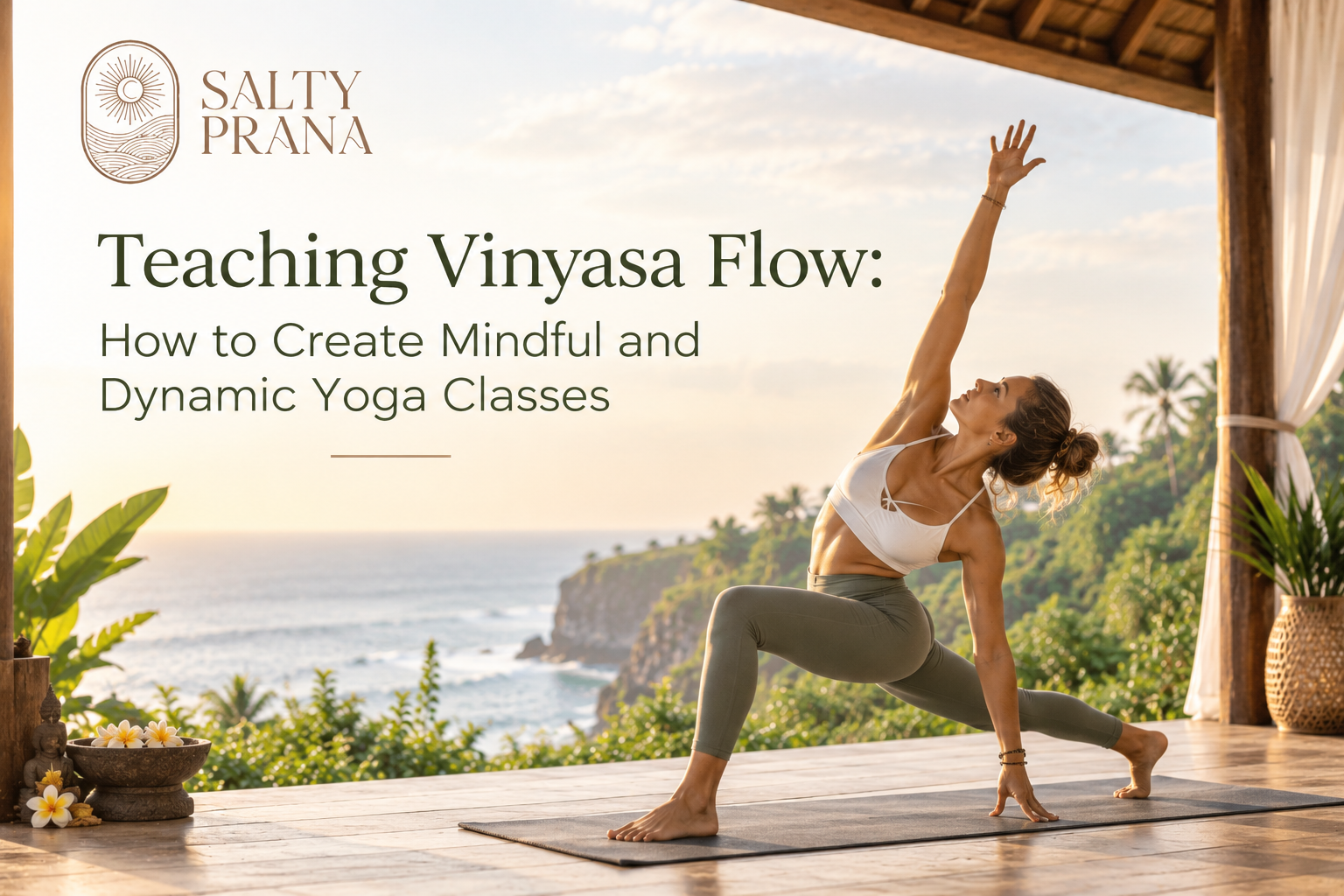
Teaching Vinyasa Flow: How to Create Mindful and Dynamic Yoga Classes

We're Celine & Benny
Hello! We're Celine and Ben the founders of Salty Prana Retreat Centre. Our paths crossed years ago on a yoga mat, just like the one you might be standing on today. Since then, we've traveled the world, learning, teaching, and soaking in every bit of wisdom this ancient practice has to offer.
With over a decade of experience between us, we've poured every ounce of our knowledge, heart, and soul into creating a unique teacher training that's more than just a course—it's an absolute transformation. For both those who want to teach Yoga and those who just want to learn more about themselves. We believe in yoga's power to change lives because it's changed ours. We're not just instructors; we're your supporters, and your biggest cheerleaders.
We've built this program to share with you not just the techniques and poses but the deeper essence of yoga—a path to inner peace, confidence, and a fulfilling life.
Here's why you can rely on us:
Meet the Hearts Behind the Training

Shared Wisdom from 10,000+ Hours in the Studio
Two Decades Guiding Yoga Journeys
Guided Over 200 Yoga Teachers to Success
Retreat Center and Yoga Studio Owners In Bali
Personal, Hands-On Teaching Approach

Join Our Worldwide Community
We believe the real journey starts when you step off the mat and into the world as a yoga teacher. That's why our support extends far beyond the last day of training.
We offer ongoing mentorship to help you navigate the challenges and opportunities that come with teaching yoga. Whether it's refining your teaching style, finding your unique voice, or building your yoga business, we're here for you. Our community is your community, a network of fellow graduates and yoga enthusiasts who support, share, and grow together.
A community for life
choose your training

Our amazing designer, Amy, is giving the Salty Prana community (you!) an exclusive $100 voucher to spend in the Yogi Web store - use it to purchase a website template or custom design, including the $99 mini website in the store!
Love our website?

