
“How to Practice Prana Mudra: Steps, Benefits & Precautions” is exactly what this guide covers: the correct hand position, what it actually does for you, and what to watch out for before you sit down and try it. Research shows that regular mudra practice can improve breathing capacity and shift the nervous system toward a calmer, more relaxed state. At Salty Prana, our yoga teacher training retreat in Bali covers mudras alongside yoga meditation as part of a well-rounded practice, and plenty of our students first come across this gesture during our Vinyasa yoga teacher training.
Objective
Our aim here is simple: give you a practical, step by step understanding of this hand gesture so you can practise it correctly and know what it’s actually for.
What Is Prana Mudra?
Prana means life force, and mudra means seal or gesture. Put the two together and you get a hand position said to activate and channel vital energy through the body. It’s one of many yoga hand gestures used in Hatha Yoga, though this particular one gets singled out often because of how accessible it is, even for complete beginners.
Why Hands, Specifically?
Ancient yogis believed the hands hold concentrated nerve endings connected to different organs and energy pathways. Touching specific fingers together, the thinking goes, completes a kind of energetic circuit. Whether or not you buy into that fully, there’s no denying how the practice settles the mind almost immediately once you sit with it.
How Do You Practice Prana Mudra?
Getting the hand position right takes seconds. Getting the most from it takes a bit more attention to breath and posture.
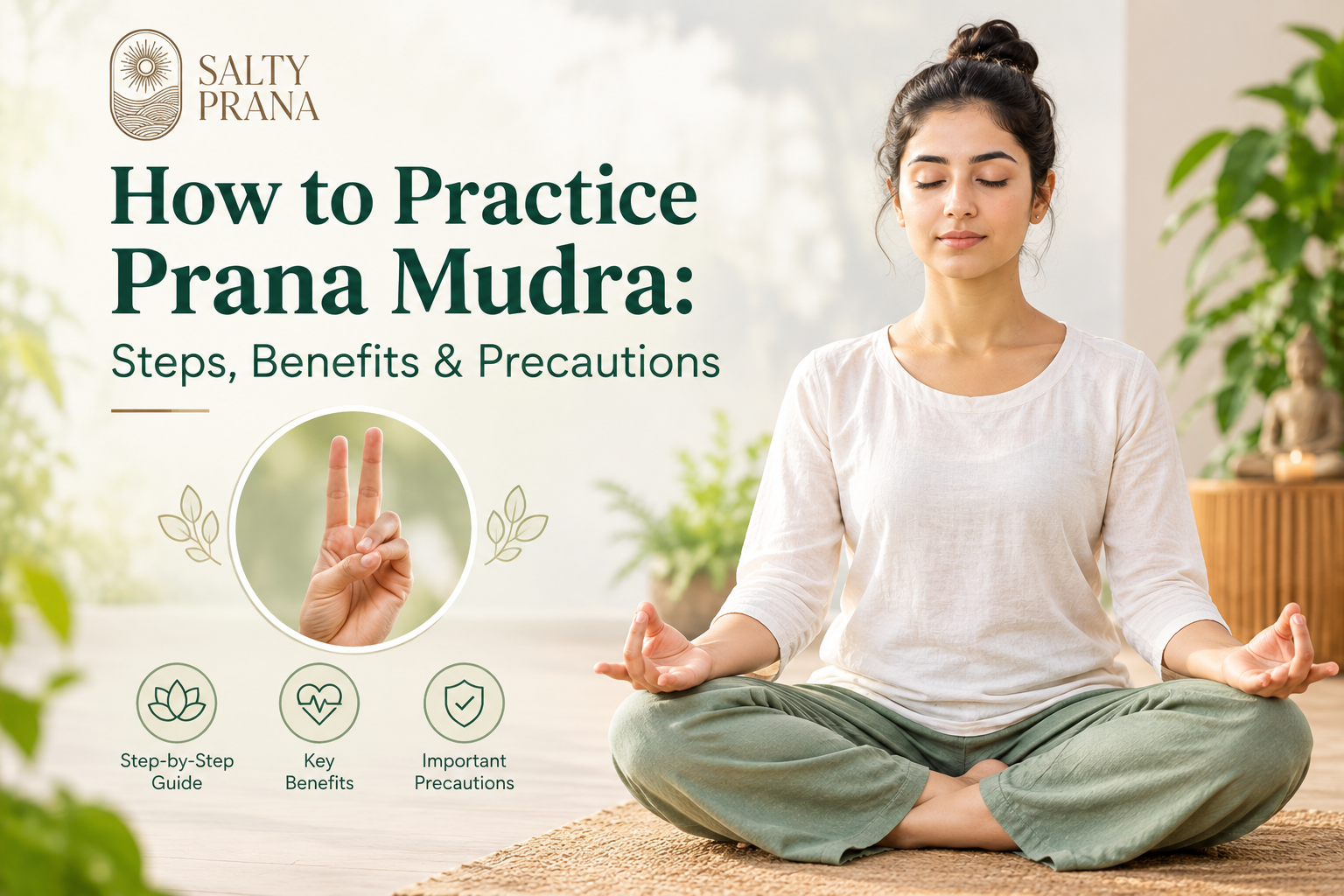
- Sit comfortably, spine tall, in a cross legged position or on a chair with feet flat on the floor.
- Bring the tip of your thumb to touch the tips of your ring finger and little finger, keeping the other two fingers extended.
- Rest your hands on your knees, palms facing upward.
- Close your eyes and breathe slowly through the nose.
- Hold the position for five to fifteen minutes, longer once you’re used to it.
Pairing this with a breathing technique such as Anulom Vilom tends to deepen the effect, since the alternate nostril breathing works alongside the hand gesture rather than against it.
If you’d like to feel the difference for yourself with proper guidance, our courses walk you through mudra and pranayama practice together, not in isolation.
What Are the Benefits of This Gesture?
Practitioners have reported a range of benefits from consistent practice, though results do vary from person to person:
- A noticeable lift in energy and reduced fatigue.
- Better focus during meditation or study.
- Some say it supports the immune system, a claim that goes back to traditional teachings rather than clinical trials.
- The nervous system tends to settle too, especially once you pair it with slow, steady breathing.
- Hands and fingers often feel warmer, with better circulation after a few minutes.
Who Tends to Benefit Most?
Honestly, it’s the students who show up daily, even for five minutes, who notice the shift first. Dip in once a week and you’ll feel something, sure, but consistency beats duration every time here.
What Are the Precautions to Keep in Mind?
It’s a gentle practice overall, but a couple of things are worth flagging before you start:
- Skip it right after a big meal; give your body time to digest first.
- Got low blood pressure? Pay attention to how you feel and adjust from there.
- Stop if you feel light-headed or unusually fatigued during practice.
- Pregnant women should check with a teacher before adding new mudras to their routine.
- Don’t force the finger position if you have joint pain or arthritis; ease into it gradually.
A Quick Note
None of these precautions should put you off trying it. They’re simply there so you practise sensibly, the same way you would with any new technique.
How Does It Compare to Other Yoga Hand Gestures?
There are dozens of mudras, each targeting something slightly different. A few worth knowing:
Apana Mudra
Linked to detoxification and elimination, often used to support digestion.
Gyan Mudra
Probably the most recognisable mudra, associated with knowledge and concentration.
Chin Mudra
Similar in form to Gyan Mudra but with the palms facing downward, used to ground the body.
Surya Mudra
Associated with the fire element, often practised to boost metabolism and warmth.
Each gesture has its own place in a practice, and learning when to use which one is part of what we teach in our courses.
Bringing Prana Mudra Into Your Daily Practice
This isn’t a gesture that demands hours of your day. A few quiet minutes each morning, hands resting, breath steady, is enough to start noticing a difference. If you’d like to learn it properly, alongside the traditional yoga practices it comes from, we’d love to have you join us in Bali.
Key Takeaways
- This mudra is formed by joining the thumb, ring finger and little finger.
- It’s traditionally linked to boosting energy and vitality.
- A few minutes of daily practice, paired with steady breathing, is usually enough.
- It sits alongside other yoga hand gestures, each with its own purpose.
- Certain precautions matter, particularly around timing and existing health conditions.
Frequently Asked Questions
1. What does this mudra actually do?
It’s traditionally believed to boost energy and vitality by directing the body’s life force through a specific hand position.
2. How long should I hold the position for?
Five minutes to start. Build up from there, and fifteen minutes is a reasonable spot to aim for once it feels natural.
3. Can I practise this mudra lying down?
You can, but sitting upright with a straight spine tends to work better, mostly because it keeps the energy flowing and your focus sharper.
4. Is it safe to combine with other mudras in one session?
Generally yes. That said, introduce one new gesture at a time so you can actually notice what each one feels like on its own, rather than blending the effects together.
5. Do I need to learn this from a teacher?
Not strictly, but proper guidance helps you get the hand position and breathing right from the start. Our teacher training programmes cover this in detail, alongside a wider range of mudras and breathing techniques.
How to Practice Prana Mudra: Steps, Benefits & Precautions

We're Celine & Benny
Hello! We're Celine and Ben the founders of Salty Prana Retreat Centre. Our paths crossed years ago on a yoga mat, just like the one you might be standing on today. Since then, we've traveled the world, learning, teaching, and soaking in every bit of wisdom this ancient practice has to offer.
With over a decade of experience between us, we've poured every ounce of our knowledge, heart, and soul into creating a unique teacher training that's more than just a course—it's an absolute transformation. For both those who want to teach Yoga and those who just want to learn more about themselves. We believe in yoga's power to change lives because it's changed ours. We're not just instructors; we're your supporters, and your biggest cheerleaders.
We've built this program to share with you not just the techniques and poses but the deeper essence of yoga—a path to inner peace, confidence, and a fulfilling life.
Here's why you can rely on us:
Meet the Hearts Behind the Training

Shared Wisdom from 10,000+ Hours in the Studio
Two Decades Guiding Yoga Journeys
Guided Over 200 Yoga Teachers to Success
Retreat Center and Yoga Studio Owners In Bali
Personal, Hands-On Teaching Approach
Join Our Worldwide Community
We believe the real journey starts when you step off the mat and into the world as a yoga teacher. That's why our support extends far beyond the last day of training.
We offer ongoing mentorship to help you navigate the challenges and opportunities that come with teaching yoga. Whether it's refining your teaching style, finding your unique voice, or building your yoga business, we're here for you. Our community is your community, a network of fellow graduates and yoga enthusiasts who support, share, and grow together.
A community for life
choose your training

Our amazing designer, Amy, is giving the Salty Prana community (you!) an exclusive $100 voucher to spend in the Yogi Web store - use it to purchase a website template or custom design, including the $99 mini website in the store!
Love our website?

