
Yin Yoga is often described as slow, gentle, and deeply restorative, but it is much more than that. If you’ve ever wondered about the science of Yin Yoga explanation, you’ll find this practice combines modern knowledge of connective tissue with traditional yogic and Chinese wellness philosophies. Yin yoga emphasizes stillness rather than muscular effort, which enables the body and mind to react differently than in more rapid yoga styles.
The World Health Organization recommends regular physical activity as an important part of maintaining overall physical and mental well-being. While Yoga includes many styles, mindful movement and relaxation practices increasingly support healthy lifestyles.
At Salty Prana students are invited to discover Yin Yoga as a physical and mindful practice. In Bali, participants undergo an immersive training, learning more about the body’s connective tissues, mindful awareness, and the traditional concepts that have shaped Yin Yoga for generations.
What Makes Yin Yoga Different?
Unlike more dynamic styles of yoga that flow from one posture to the next, Yin Yoga is about holding postures for longer periods of time. The poses are generally held for three to five minutes, allowing the body to relax and creating a gentle but sustained stress on the deeper connective tissues.
This more gradual approach produces a very different experience than that of active movement practices. Yin builds patience, awareness, and mindful observation rather than heat and muscular strength.
Many students who enroll in Yin Yoga teacher training Bali programs discover that the greatest challenge is not physical intensity but learning to become comfortable with stillness.
The Body’s Connective Network
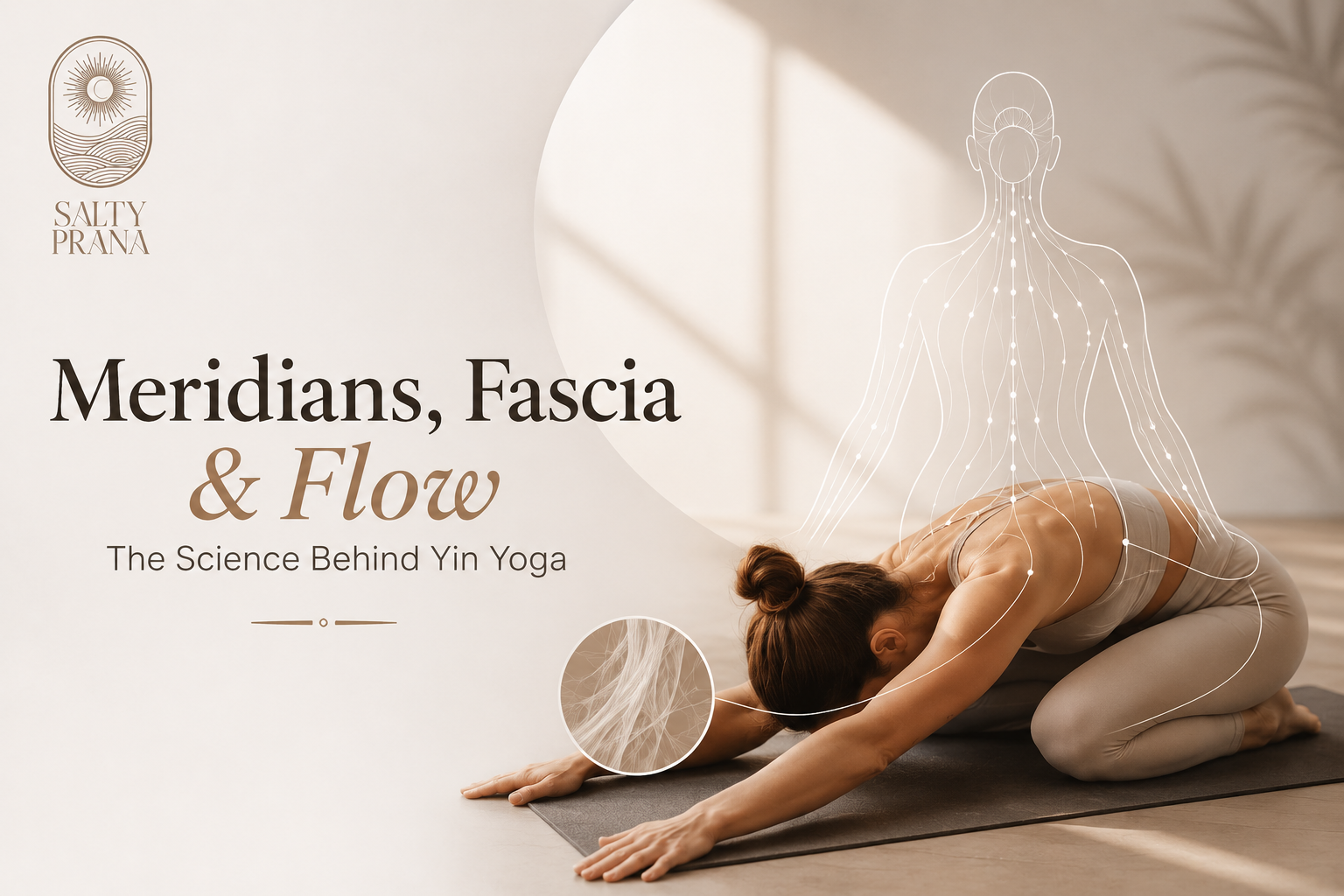
One of the most compelling aspects of Yin Yoga is the relationship between fascia and yoga science.
Fascia is a continuous web of connective tissue that surrounds muscles, joints, bones, and organs throughout the body. Yin Yoga targets connective tissues, rather than individual muscles, applying gentle, sustained tension over time.
Slow stretching can help maintain tissue mobility, increase hydration in connective tissues, and promote healthy movement patterns, new research suggests. Research is still evolving in this area, but many practitioners report experiencing greater freedom of movement and less stiffness after consistent Yin practice.
Instead of forcing flexibility, Yin Yoga encourages slow adjustment, giving tissues time to respond to mild stress.
Meridians: A Traditional Perspective
The concept of meridians in Yin Yoga comes from Traditional Chinese Medicine (TCM), where energy, or Qi, is believed to flow through channels called meridians.
Meridians are not considered anatomical structures in modern medicine, but many Yin Yoga teachers draw from this traditional framework to inform their sequencing and intentions in practice. Some poses are believed to align with certain meridian pathways and to restore balance according to TCM principles.
For many practitioners, this view adds a meaningful dimension to Yin Yoga by connecting the physical practice with mindfulness and self-reflection.
Both styles offer unique benefits, and many practitioners choose to include both in their regular practice.
Comparing Yin and Dynamic Yoga
| Feature | Yin Yoga | Dynamic Yoga |
| Pace | Slow and still | Active and flowing |
| Pose Duration | 3 to 5 minutes | A few breaths |
| Primary Focus | Connective tissues | Muscles and movement |
| Physical Effort | Gentle | Moderate to vigorous |
| Mental Focus | Mindfulness and observation | Breath with movement |
Why Long Holds Matter
Holding postures for several minutes gives the body time to soften naturally rather than through muscular force. As muscles relax, gentle pressure reaches deeper connective tissue.
These long holds also offer an opportunity to slow the breath, observe sensations without judgment, and cultivate patience. Students learn to be present with their physical and mental experiences instead of always being on the go.
This mindful approach is one reason many practitioners value the Yin Yoga deep tissue benefits associated with regular practice, particularly for improving mobility and supporting relaxation.
Yin Yoga and the Nervous System
One of the most valuable things about Yin Yoga is that it helps you to get still. They mix slow breathing with long held postures to create an atmosphere that encourages relaxation and mindful awareness.
The practice is oriented toward internal sensations rather than external distractions. Students can become more aware of their breath, posture, and physical responses. Everyone’s experience is different, but many people report feeling calmer, more balanced, and mentally refreshed after a Yin class.
Instead of rushing, Yin Yoga emphasizes the importance of slowing down, an approach that fits well with today’s fast-paced lifestyles.
Why Learn Yin Yoga in Bali?
Yin Yoga training in Bali is more than a professional certification for many future teachers. Bali’s tranquil environment is ideal for immersive learning, allowing students to disconnect from everyday life and to immerse themselves in their practice.
Salty Prana’s Yin Yoga training integrates practical teaching skills with anatomy, philosophy, meditation, and mindful movement. Students are welcome to deepen their personal understanding of Yin Yoga in a supportive community and grow in confidence. Experienced teaching combined with the peaceful setting of Bali provides a valuable learning experience for practitioners at any stage of their yoga journey.
Bringing Science and Tradition Together
What’s unique about Yin Yoga is that it merges two complementary perspectives. Modern anatomy provides some understanding of how gentle, sustained stretching might affect connective tissues. Traditional Chinese Medicine offers a more holistic model of the body, with concepts like meridians and the flow of Qi.
Most practitioners appreciate these perspectives not as competing ideas, but as enriching different aspects of the practice. Knowing both helps students approach Yin Yoga with a sense of curiosity, respect, and appreciation for its wider origins.
Yin Yoga is an opportunity to approach the body and mind from several angles, whether you are interested in the anatomy, the mindfulness, or the traditional philosophy.
Deepen Your Yin Yoga Journey with Salty Prana
Understanding the science of Yin Yoga explanation goes far beyond simply learning how long to hold a pose. It’s about investigating the relationship between connective tissue, mindful movement, breath, and traditional wisdom while developing a practice that supports physical and mental well-being.
At Salty Prana we teach Yin Yoga with respect for the traditional roots of the practice as well as the contemporary understanding of anatomy and mindful movement. If you’re looking to deepen your personal practice or become a more confident teacher, our Bali immersion training provides the knowledge, guidance, and caring community to grow. If you want to dive deeper into Yin Yoga, start your journey at Salty Prana and explore where stillness can take you.
Frequently Asked Questions
Is Yin Yoga backed by science?
Research supports the role of gentle stretching, connective tissue health, and relaxation, while concepts like meridians belong to Traditional Chinese Medicine rather than modern anatomy.
How long should Yin Yoga poses be held?
Most Yin Yoga postures are held between three and five minutes, although experienced practitioners may remain in certain poses for longer periods.
Is Yin Yoga suitable for beginners?
Yes. Yin Yoga is accessible for most beginners because it emphasizes mindful awareness, gentle movement, and using props to support comfortable positioning.
Do I need previous teaching experience before joining Yin Yoga training?
No. Many Yin Yoga training programs welcome dedicated practitioners who want to deepen their understanding before beginning or expanding their teaching journey.
Why is Bali popular for Yin Yoga training?
Bali combines experienced teachers, peaceful surroundings, and a wellness-focused community, creating an inspiring environment for immersive yoga education and personal growth.
Meridians, Fascia & Flow: The Science Behind Yin Yoga Explained

We're Celine & Benny
Hello! We're Celine and Ben the founders of Salty Prana Retreat Centre. Our paths crossed years ago on a yoga mat, just like the one you might be standing on today. Since then, we've traveled the world, learning, teaching, and soaking in every bit of wisdom this ancient practice has to offer.
With over a decade of experience between us, we've poured every ounce of our knowledge, heart, and soul into creating a unique teacher training that's more than just a course—it's an absolute transformation. For both those who want to teach Yoga and those who just want to learn more about themselves. We believe in yoga's power to change lives because it's changed ours. We're not just instructors; we're your supporters, and your biggest cheerleaders.
We've built this program to share with you not just the techniques and poses but the deeper essence of yoga—a path to inner peace, confidence, and a fulfilling life.
Here's why you can rely on us:
Meet the Hearts Behind the Training

Shared Wisdom from 10,000+ Hours in the Studio
Two Decades Guiding Yoga Journeys
Guided Over 200 Yoga Teachers to Success
Retreat Center and Yoga Studio Owners In Bali
Personal, Hands-On Teaching Approach

Join Our Worldwide Community
We believe the real journey starts when you step off the mat and into the world as a yoga teacher. That's why our support extends far beyond the last day of training.
We offer ongoing mentorship to help you navigate the challenges and opportunities that come with teaching yoga. Whether it's refining your teaching style, finding your unique voice, or building your yoga business, we're here for you. Our community is your community, a network of fellow graduates and yoga enthusiasts who support, share, and grow together.
A community for life
choose your training
Our amazing designer, Amy, is giving the Salty Prana community (you!) an exclusive $100 voucher to spend in the Yogi Web store - use it to purchase a website template or custom design, including the $99 mini website in the store!
Love our website?

