
It’s quite common for students to come to the mat with not only physical tension but also other issues. They are carrying the effects of overstimulated nervous systems, ongoing stress, emotional drain, and a constant feeling of “being on the edge.” Although vigorous exercise has its benefits, more and more yoga instructors are realizing that a slower pace can be one of the most effective methods for promoting well-being that lasts.
That is why yin yoga nervous system healing is very timely. Yin Yoga sets the stage for students to change their stressed and hypervigilant conditions to a more balanced and regulated one by holding the asanas longer, using the breath consciously, and being still with purpose.
Yin Yoga is not just another way to relax or release stress. If you are planning to teach, Remember how this type of yoga affects the nervous system as many of you are going to include it in your teaching, and at the same time, stress-related issues are increasing.
Did You Know?
A study published by the U. S. National Library of Medicine suggests that slow, mindful yoga practices can have a positive effect on the balance of the autonomic nervous system and on stress regulation, because of this helping to maintain a healthy state of mental and emotional well-being.
Key Takeaways
- Yin yoga nervous system healing is about helping the body naturally find balance, not pushing it to relax.
- Some students may find stillness quite difficult, Mostly if they are under long-term stress or have anxiety.
- Teachers who understand the concepts of polyvagal theory yoga teaching are better equipped in making their classes safer and more nurturing environments for their students.
- Being aware of our breath is a very effective way of calming the body’s stress reactions during Yin Yoga.
- Typically, the biggest tale from practicing Yin Yoga lies in one’s emotional strength and consciousness of self rather than just increased flexibility alone.
- Continuing professional development is one of the ways educators can become more capable in assisting their learners who are dealing with stress, feeling overwhelmed, and experiencing nervous system dysfunction.
Understanding Nervous System Regulation Through Yin Yoga
The nervous system is a constant scanner checking any changes in safety, threat, or connection. Stress, pressure at work, emotional overwhelm, or lack of sufficient rest are the main reasons why the body’s stress response remains activated for longer periods of time, in fact, these types of stressors might cause a continuous activation of the stress response.
Common signs include:
- Struggle to unwind
- Mind keeps jumping from one thought to another
- Problems with falling and staying asleep
- Strong emotional reactions
- Continuous muscle stiffness
- Physical symptoms of anxiety
Yin Yoga brings an entirely new experience unlike other movement-based practices. Rather than focusing indefinitely on muscle engagement, yin yoga poses allow students to gradually relax and focus attention.
When students calm down in postures and take deep breaths, the body gradually turns away from a stress-related state and toward a state that is more restorative. This explains why a lot of yoga practitioners go for yin yoga for stress relief and emotional stability.
Rather than making a person relax by the mere power of suggestion, Yin Yoga brings about a scenario where the nervous system can feel safe enough to regulate itself without any external intervention.
Why Stillness Can Feel Challenging for Some Students
Teachers’ ability to distinguish that stillness does not always equate to calmness is a crucial precept.
For kids with chronic stress, anxiety, or trauma, stepping back may, at first, seem like a pain. When one external distraction is taken away, one is reminded of the internal sensations one has been carrying all along.
That notwithstanding, in-person, trauma-informed awareness is the fad growing in worldwide yoga pedagogy.
It should not be taken for granted that a student who finds it difficult to hold a long pose is necessarily resistant to the yoga practice. The state of their nervous system might just be that they require more support, have more options at their disposal, and experience more freedom in the given experience.
Here is how teachers may assist with this:
- Giving options rather than giving rigid instructions
- Motivating the students to modify the poses when necessary
- Employing language which is invitational
- Permitting students to come out of postures, of course, when they must
- Dispensing with the use of pressure to stay in a still pose at all costs
When students are made to feel that they are in control rather than being controlled, it is
The Connection Between Yin Yoga and Polyvagal Theory
Discussions around polyvagal theory yoga teaching have become increasingly common in teacher training programs.
Developed by Stephen Porges, Polyvagal Theory explores how the autonomic nervous system responds to safety and threat.
While yoga teachers are not therapists, understanding basic principles can enhance class delivery.
According to the theory, feelings of safety support greater social connection, emotional regulation, and resilience. Practices that encourage slow breathing, mindful awareness, and non-threatening environments may help create conditions that support these states.
Yin Yoga naturally incorporates many of these elements:
- Slow pacing
- Breath awareness
- Reduced sensory overload
- Opportunities for self-observation
- Emphasis on acceptance rather than achievement
For teachers, this perspective can shift the goal of practice from “getting deeper into a pose” toward creating experiences that foster regulation and ease.
How Breath Influences the Nervous System During Yin Practice
Breathing patterns and nervous system states are closely connected.
When stress increases, breathing often becomes shallow and rapid. During Yin Yoga, students are encouraged to slow their breath without forcing it.
This subtle shift can influence physiological responses associated with relaxation and recovery.
Rather than prescribing complicated breathing techniques, many experienced Yin teachers encourage students to simply notice:
- The rhythm of the breath
- Areas of tension
- Sensations of expansion and release
Over time, this awareness can strengthen interoceptionthe ability to perceive internal bodily sensationswhich plays an important role in self-regulation.
Supporting Students Experiencing Anxiety
The relationship between yoga for anxiety and nervous system regulation continues to attract growing interest among practitioners and researchers.
Students experiencing anxiety often benefit from predictable environments and clear guidance.
Teachers can support these students by:
Creating smooth transitions between poses, avoiding abrupt changes, offering grounding cues, and encouraging students to focus on present-moment sensations rather than performance.
Language also matters.
Instead of saying:
“Relax completely.”
Consider:
“Notice what feels available to soften today.”
This approach reduces pressure and acknowledges that every nervous system responds differently.
Teaching Yin Yoga Beyond Physical Flexibility
Many students initially join Yin Yoga classes seeking improved mobility or flexibility.
While these benefits are valuable, experienced teachers often observe deeper shifts.
Students frequently report:
- Improved emotional resilience
- Greater self-awareness
- Better sleep quality
- Reduced stress levels
- Enhanced capacity to pause before reacting
These outcomes highlight why Yin Yoga has evolved from a flexibility-focused practice into a valuable tool for nervous system support.
For teachers, recognizing this broader impact can transform the way classes are structured and communicated.
Why Advanced Education Matters for Yin Teachers
As interest in nervous system-informed yoga continues growing, teachers are seeking more comprehensive education that extends beyond pose mechanics.
A quality yin yoga training bali experience often explores:
- Nervous system fundamentals
- Mindfulness practices
- Breath awareness
- Trauma-sensitive teaching principles
- Functional anatomy
- Meditation techniques
Understanding these areas allows teachers to create classes that feel supportive, accessible, and relevant to modern students.
Begin Teaching Yin Yoga with Greater Confidence
If you’re ready to deepen your understanding of Yin Yoga beyond postures and flexibility, explore Salty Prana’s 50hr Yin Yoga Teacher Training Bali program. Gain practical insight into mindfulness, anatomy, nervous system awareness, and teaching methodologies that help students cultivate greater balance both on and off the mat.
Frequently Asked Questions
How does Yin Yoga help regulate the nervous system?
Yin Yoga encourages slower breathing, mindful awareness, and extended periods of stillness. These elements may help shift the body away from chronic stress responses and toward states associated with rest, recovery, and balance.
Is Yin Yoga beneficial for people experiencing anxiety?
Many practitioners find Yin Yoga supportive because it promotes grounding, self-awareness, and nervous system regulation. However, experiences vary, and students should always practice at a pace that feels appropriate for them.
What is the connection between Polyvagal Theory and Yin Yoga?
Polyvagal Theory explores how the nervous system responds to safety and threat. Yin Yoga incorporates practices such as slow breathing, mindful awareness, and gentle pacing that may support feelings of safety and regulation.
Can yoga teachers apply nervous system concepts without being therapists?
Yes. Yoga teachers can use trauma-sensitive communication, offer choices, and create supportive class environments while remaining within their professional scope of practice.
Why is nervous system education becoming important in Yin Yoga training?
Modern students often seek support for stress management and emotional well-being. Understanding nervous system principles helps teachers create more informed, compassionate, and effective Yin Yoga experiences.
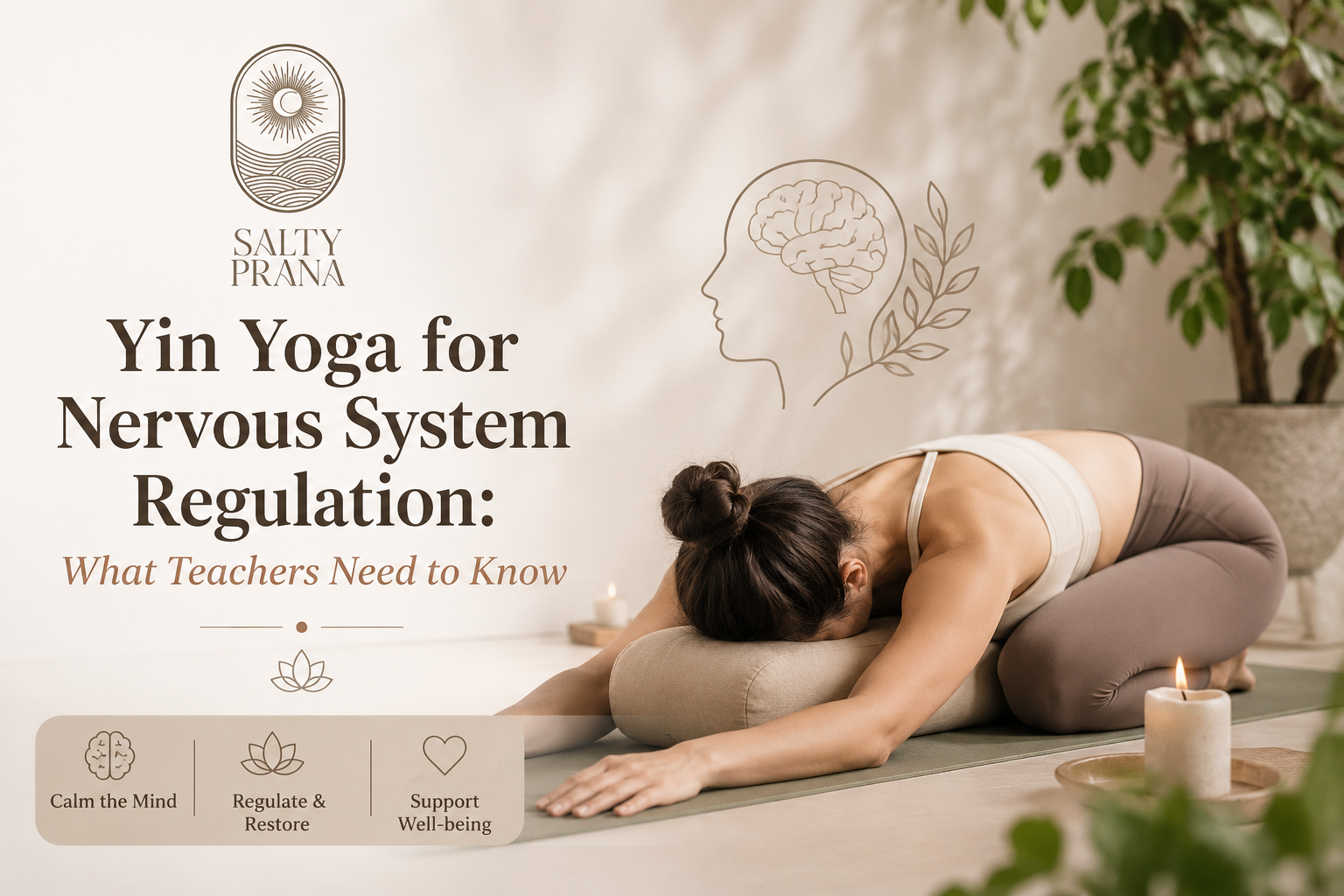
Yin Yoga for Nervous System Regulation: What Teachers Need to Know

We're Celine & Benny
Hello! We're Celine and Ben the founders of Salty Prana Retreat Centre. Our paths crossed years ago on a yoga mat, just like the one you might be standing on today. Since then, we've traveled the world, learning, teaching, and soaking in every bit of wisdom this ancient practice has to offer.
With over a decade of experience between us, we've poured every ounce of our knowledge, heart, and soul into creating a unique teacher training that's more than just a course—it's an absolute transformation. For both those who want to teach Yoga and those who just want to learn more about themselves. We believe in yoga's power to change lives because it's changed ours. We're not just instructors; we're your supporters, and your biggest cheerleaders.
We've built this program to share with you not just the techniques and poses but the deeper essence of yoga—a path to inner peace, confidence, and a fulfilling life.
Here's why you can rely on us:
Meet the Hearts Behind the Training

Shared Wisdom from 10,000+ Hours in the Studio
Two Decades Guiding Yoga Journeys
Guided Over 200 Yoga Teachers to Success
Retreat Center and Yoga Studio Owners In Bali
Personal, Hands-On Teaching Approach

Join Our Worldwide Community
We believe the real journey starts when you step off the mat and into the world as a yoga teacher. That's why our support extends far beyond the last day of training.
We offer ongoing mentorship to help you navigate the challenges and opportunities that come with teaching yoga. Whether it's refining your teaching style, finding your unique voice, or building your yoga business, we're here for you. Our community is your community, a network of fellow graduates and yoga enthusiasts who support, share, and grow together.
A community for life
choose your training

Our amazing designer, Amy, is giving the Salty Prana community (you!) an exclusive $100 voucher to spend in the Yogi Web store - use it to purchase a website template or custom design, including the $99 mini website in the store!
Love our website?

