
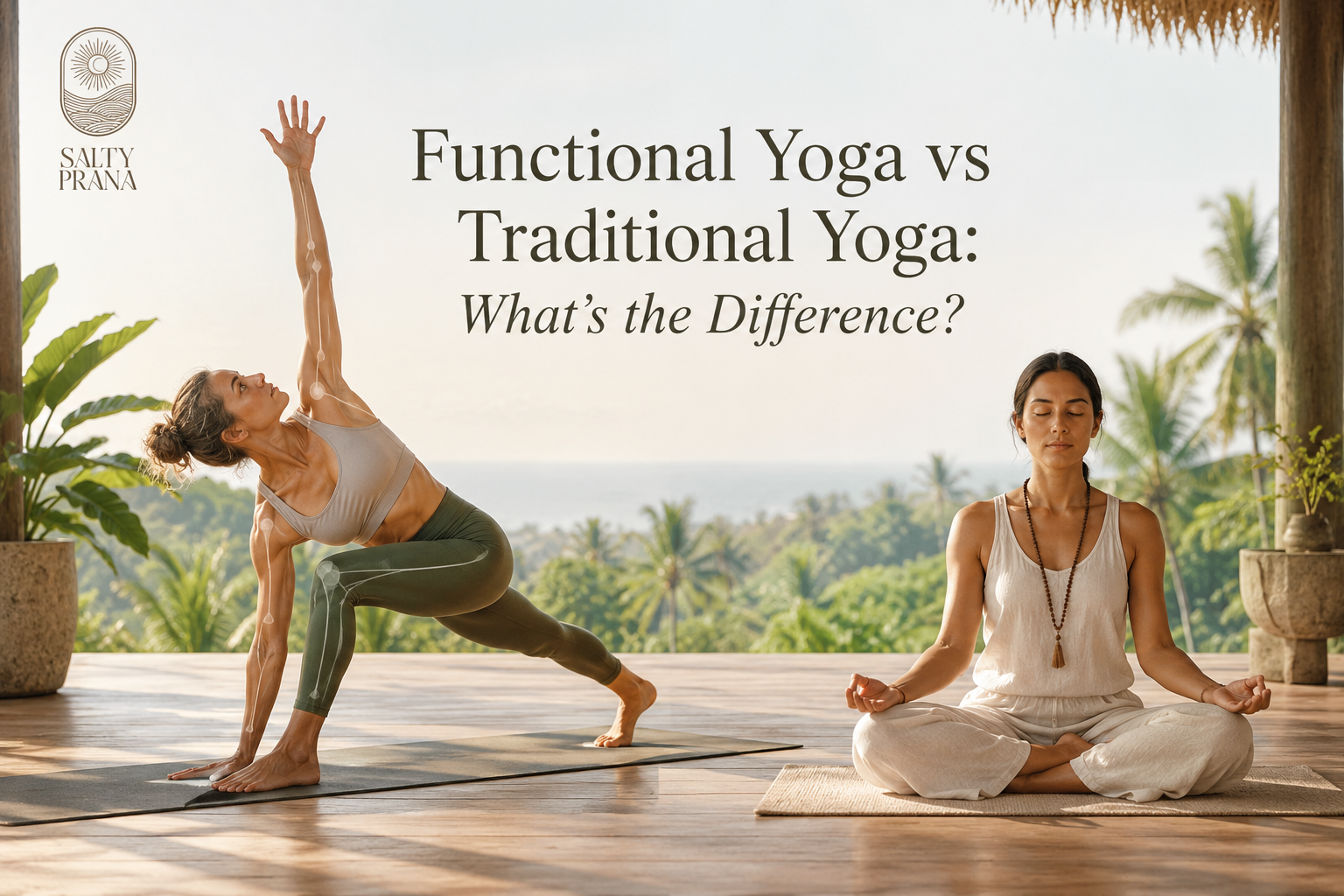
Yoga has evolved far beyond the ancient aesthetic poses we often see on social media. While classic practices emphasize holding specific shapes, modern movement science offers a fresh perspective on how we approach the mat.
Understanding the key differences between functional yoga and traditional styles can transform how you move, stretch, and recover in your daily life.
Defining the Core Approaches
Traditional yoga focuses heavily on lineage, sacred geometry, and achieving classic visual alignments in postures like Trikonasana or Paschimottanasana.
It often encourages practitioners to match an external, standardized blueprint regardless of their unique skeletal shape or joint limits.
Functional yoga flips this paradigm entirely on its head. Instead of asking your body to fit a rigid pose, it asks how a pose can be adapted to serve your body’s specific biomechanics.
The primary goal is building real-world strength, range of motion, and resilience rather than forcing a photo-perfect posture.
Purpose and Principles
| Feature | Traditional Yoga | Functional Yoga |
| Primary Focus | Lineage, form, spiritual connection | Biomechanics, individual joint mobility, strength |
| Movement Style | Linear alignment, sustained static holds | Dynamic ranges, active engagement, varied movement planes |
| Target Outcome | Postural perfection, energy flow, flexibility | Functional strength, injury prevention, longevity |
Anatomy, Alignment, and Unique Bodies
In traditional systems, alignment cues are largely universal. Every student is often given the same instructions to place their feet, square their hips, or extend their spine.
The functional approach recognizes that human bone structure varies wildly from person to person. Compression where bone meets bone places a physical limit on flexibility that no amount of stretching can change.
By integrating deep joint awareness, often taught in a specialized yoga anatomy training program, practitioners learn to work with their unique anatomy rather than against it.
Breathwork: Energy Flow vs. Biomechanical Regulation
Both traditions place deep emphasis on breath control, but their applications address different aspects of physical and mental health:
- Traditional Pranayama: Views breath as prana (vital life energy). Practices like Nadi Shodhana (alternate nostril breathing) or Kapalabhati aim to clear energy channels, balance subtle body systems, and clear mental fog.
- Functional Breathwork: Views breath through the lens of biomechanics and nervous system regulation. It focuses on functional diaphragm engagement, ribcage expansion, and intra-abdominal pressure (IAP) to stabilize the core during movement while lowering sympathetic stress.
Active Strength vs Passive Flexibility
- Passive Stretching: Common in traditional styles, relying on gravity or external force to pull muscles long. While relaxing, it can sometimes destabilize joints if not supported by muscle engagement.
- Active Engagement: Functional movement emphasizes active mobility—the ability to control your body through its full range of motion using muscle power.
- Joint Stability: By actively controlling movement near maximum range, you build joint capsule strength, making your body far less susceptible to strains and tears during daily activities.
Dynamic Movement vs. Static Holds
Traditional yoga frequently relies on static holds, holding shapes like Downward-Facing Dog or Warrior II for extended periods. While this builds mental discipline and isometric endurance, it rarely mirrors how the body moves off the mat.
Functional yoga introduces multi-planar movement and dynamic transitions. Instead of moving purely along the sagittal plane (forward and backward motions like Sun Salutations), functional sessions introduce frontal and transverse plane movements—such as side-glides, torso rotations, and multi-directional lunges. This trains your body to handle unpredictable, real-world movements safely.
Bridging Modern Science and Daily Life
Many modern yogis combine the structural depth of functional movement with restorative practices like yin yoga teacher training methodologies to balance active strength with deep fascia release.
This blend ensures that your physical practice translates directly to everyday movements—like lifting heavy groceries, sitting comfortably, or playing sports without pain.
When you emphasize targeted mobility training for yoga, your hips, shoulders, and spine gain the strength necessary to carry you effortlessly through decades of living.
Which Style Suits Your Goals?
| If Your Primary Goal Is… | Consider Choosing… | Why It Fits |
| Spiritual Connection & Tradition | Traditional Yoga (Ashtanga, Hatha) | Offers structured lineages, chanting, philosophy, and energetic grounding. |
| Injury Rehabilitation & Pain-Free Movement | Functional Yoga | Tailors every pose to your current joint limits and bone structure. |
| Athletic Performance Cross-Training | Functional Yoga | Trains active mobility, core stability, and multi-planar agility. |
| Stress Relief & Mental Quiet | Either (or Gentle/Yin) | Both regulate the nervous system through focused attention and breathwork. |
Finding the Right Path for Your Mat
Neither approach is inherently superior; the right choice depends on your personal health goals, physical history, and movement needs.
If you crave traditional ritual, quiet stillness, and spiritual immersion, classic yoga styles remain a powerful foundation. However, if you are recovering from injuries, looking to balance muscle imbalances, or want your time on the mat to support real-world physical performance, exploring functional movement offers a sustainable, highly tailored alternative.
At Salty Pranas, we believe movement should empower your unique body for a lifetime of health and freedom. Embracing a personalized, body-first approach ensures that your practice continually adapts as you grow.
Key Takeaways:
- Adaptability: Functional yoga adapts poses to fit your unique bone structure and joint limits, while traditional yoga relies on standardized, aesthetic alignments.
- Active Strength over Passive Stretching: Functional yoga focuses on active mobility to protect joints, whereas traditional yoga often relies on passive flexibility.
- Injury Prevention: Functional movement strengthens stabilizer muscles, making everyday tasks—like lifting, bending, and reaching—easier and safer.
Frequently Asked Questions:
1. Is functional yoga suitable for beginners or injury recovery?
Yes. Postures are tailored to your body’s current capabilities rather than forced into specific visual shapes, making it very safe for beginners and rehabilitation.
2. Does functional yoga completely replace traditional yoga poses?
No. It uses familiar poses but adjusts the alignment, entry, and muscle engagement to prioritize joint stability over appearance.
3. Will I still experience stress relief and mental clarity?
Yes. Focusing closely on body mechanics and controlled breathing fosters deep mindfulness and stress reduction.
4. How does functional yoga benefit daily life?
It builds strength throughout your entire range of motion, improving balance, posture, and joint health for real-world activities.
5. How many times a week should I practice?
Practicing 2 to 3 times a week is sufficient to notice improvements in strength, mobility, and ease of movement.
Functional Yoga vs Traditional Yoga: What’s the Difference?

We're Celine & Benny
Hello! We're Celine and Ben the founders of Salty Prana Retreat Centre. Our paths crossed years ago on a yoga mat, just like the one you might be standing on today. Since then, we've traveled the world, learning, teaching, and soaking in every bit of wisdom this ancient practice has to offer.
With over a decade of experience between us, we've poured every ounce of our knowledge, heart, and soul into creating a unique teacher training that's more than just a course—it's an absolute transformation. For both those who want to teach Yoga and those who just want to learn more about themselves. We believe in yoga's power to change lives because it's changed ours. We're not just instructors; we're your supporters, and your biggest cheerleaders.
We've built this program to share with you not just the techniques and poses but the deeper essence of yoga—a path to inner peace, confidence, and a fulfilling life.
Here's why you can rely on us:
Meet the Hearts Behind the Training

Shared Wisdom from 10,000+ Hours in the Studio
Two Decades Guiding Yoga Journeys
Guided Over 200 Yoga Teachers to Success
Retreat Center and Yoga Studio Owners In Bali
Personal, Hands-On Teaching Approach

Join Our Worldwide Community
We believe the real journey starts when you step off the mat and into the world as a yoga teacher. That's why our support extends far beyond the last day of training.
We offer ongoing mentorship to help you navigate the challenges and opportunities that come with teaching yoga. Whether it's refining your teaching style, finding your unique voice, or building your yoga business, we're here for you. Our community is your community, a network of fellow graduates and yoga enthusiasts who support, share, and grow together.
A community for life
choose your training

Our amazing designer, Amy, is giving the Salty Prana community (you!) an exclusive $100 voucher to spend in the Yogi Web store - use it to purchase a website template or custom design, including the $99 mini website in the store!
Love our website?

