
This guide on Dhauti Kriya: Discover the Traditional Practice of Yogic Purification does exactly what the title promises. We are unpacking one of yoga’s oldest internal cleansing techniques and showing you how it fits into a wider system of purification that yogis have relied on for centuries. The Hatha Yoga Pradipika, a fifteenth century yogic text, lists dhauti kriya among six shatkarmas used to clear the digestive tract and prepare the body for deeper pranayama and meditation, a fact that still guides how the practice is taught today. At Salty Prana, widely considered the best place for yoga teacher training in Bali, we introduce these techniques as part of the authentic yoga experiences Bali is known for, always in a safe and guided setting.
Objective
Our objective with this article is to give you a clear, first hand understanding of what this cleansing technique involves, why yogis have practised it for generations, and how you can approach it responsibly.
What Is Dhauti Kriya?
“Dhauti” simply means washing. In practice, it’s a Hatha Yoga technique for clearing excess mucus, bile and undigested residue out of the upper digestive system, so you can breathe easier and sit still for pranayama or meditation without your stomach getting in the way.
Where the Practice Comes From
It belongs to a much older category called traditional yoga cleansing, developed long before anyone had heard the word “wellness.” The reasoning was simple: a clear body makes for a clear mind, and that idea still shapes how the technique gets taught in traditional lineages today.
Why Do Yogis Practise Shatkarma Cleansing?
Shatkarma is the umbrella term for six cleansing actions in Hatha Yoga, and this is one of them. The logic behind all six is the same: you can’t sit still for long stretches of breathwork or meditation if your body is holding onto physical blockages that keep pulling your attention back to discomfort.
The Six Shatkarma Techniques at a Glance
- Neti (nasal cleansing)
- Dhauti (digestive tract cleansing)
- Nauli (abdominal massage)
- Basti (colon cleansing)
- Kapalabhati (skull-shining breath)
- Trataka (concentrated gazing)
Each one works on a different part of the body. Put together, they cover the whole system.
What Are the Main Types of Dhauti?
There is not just one method. Traditional texts describe several variations, each suited to a different need or level of experience.
Vaman Dhauti
This water based technique involves drinking warm salted water and gently expelling it to clear the stomach.
Vastra Dhauti
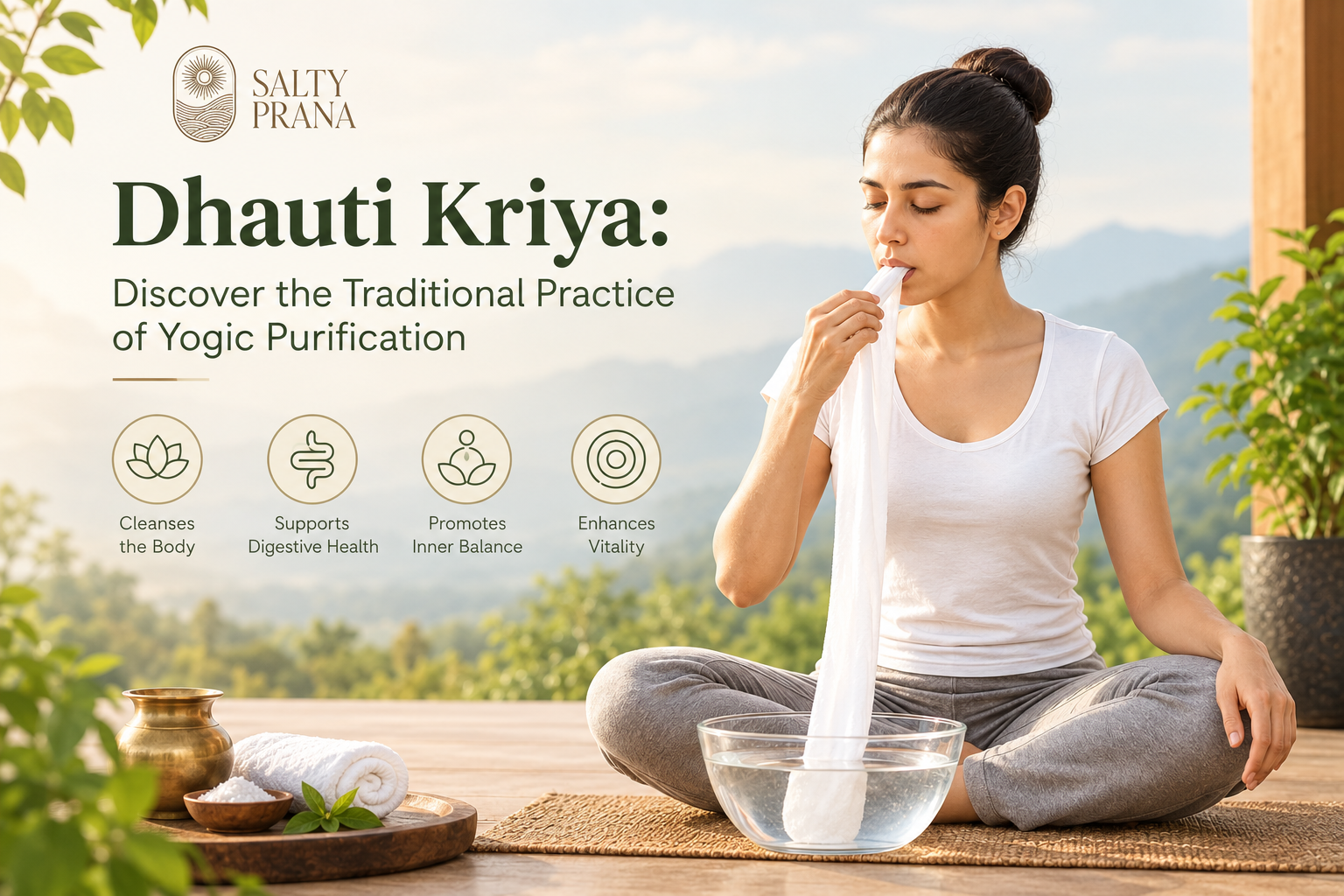
A more advanced variation using a soft, sterile cloth to cleanse the stomach lining. This should only ever be attempted with direct supervision.
Danta Dhauti
Focused on the mouth, teeth, tongue and ears, this variation is gentler and more accessible for beginners.
Other Lesser-Known Variations
Some lineages also include hrid dhauti (chest and throat cleansing) and moola shodhana (rectal cleansing), though these are far less commonly taught outside dedicated ashram settings.
A Quick Note on Safety
None of these variations should be self-taught from a video. If you are curious to explore them properly, joining a structured programme such as one of our courses at Salty Prana gives you the guidance and support needed to practise safely.
What Are the Benefits of Yogic Detox Practices?
Practitioners and traditional texts point to several benefits when yogic detox practices are done consistently and correctly:
- Supports clearer digestion and reduces bloating.
- Helps remove excess mucus that can affect the respiratory system.
- Prepares the body for longer, more comfortable pranayama sessions.
- Encourages a sense of lightness and mental clarity.
- Builds discipline and body awareness over time.
If this sounds like something you would like to experience firsthand rather than just read about, our teacher training programmes include hands on guidance in these traditional methods.
Is This Practice Safe for Beginners?
Not every variation is suitable for someone new to yoga. Gentler forms, such as danta dhauti, are generally accessible, while water based and cloth based methods require proper instruction and, ideally, an empty stomach and a calm setting.
Precautions Worth Knowing
- Avoid practising during pregnancy or if you have digestive ulcers.
- Never attempt cloth based methods without a qualified teacher present.
- Stop immediately if you feel dizzy, nauseous or unwell.
- Always practise on an empty stomach, typically first thing in the morning.
We always recommend speaking with a teacher before trying any shatkarma technique, particularly if you have an existing health condition.
How Can You Learn This Purification Technique the Right Way?
Books and videos can only take you so far. Because these techniques involve the digestive tract and require precise technique, learning in person makes a genuine difference. Our teacher training courses in Bali include dedicated sessions on shatkarma, taught step by step so you build confidence gradually. If you are ready to deepen your practice properly, we would love to welcome you to one of our upcoming trainings.
Embracing Dhauti Kriya in Your Yoga Journey
Dhauti kriya isn’t just an ancient curiosity gathering dust in old texts. People still practise it today, for the same reason yogis always have: it helps them feel clearer, lighter, and more ready for the deeper work of pranayama and meditation. Give it patience and the right guidance, and it can genuinely earn a place in your regular practice. If you’d like to explore it further, our community at Salty Prana is happy to show you the way.
Key Takeaways:
- This practice is one of six traditional shatkarma cleansing techniques used in Hatha Yoga.
- It focuses on clearing the digestive tract, particularly the stomach and oesophagus.
- There are several variations, ranging from water based to cloth based methods.
- It is best learned under the supervision of an experienced teacher, not attempted alone.
- Regular practice is said to support digestion, mental clarity and preparation for pranayama.
Frequently Asked Questions
1. What is this practice actually used for?
Mainly to clear the upper digestive tract, so excess mucus and residue don’t get in the way of digestion or breathwork.
2. Is it safe to try at home?
The gentler variations, like danta dhauti, are fine at home once someone has shown you properly. The more advanced methods aren’t something to figure out solo, though. Get supervision.
3. How often should this technique be practised?
Not daily. Traditional guidance points to a few times a month, though this really does shift depending on the person and which method you’re using.
4. Who should avoid these cleansing techniques?
Pregnant women, anyone with digestive ulcers, and people managing a serious health condition. If that’s you, talk to a teacher before trying any of this.
5. Can beginners join a course to learn this properly?
Yes, and honestly, that’s the better route anyway. Our teacher training programmes take practitioners at every level and build up to shatkarma techniques gradually, with proper supervision the whole way through.
Dhauti Kriya: Discover the Traditional Practice of Yogic Purification

We're Celine & Benny
Hello! We're Celine and Ben the founders of Salty Prana Retreat Centre. Our paths crossed years ago on a yoga mat, just like the one you might be standing on today. Since then, we've traveled the world, learning, teaching, and soaking in every bit of wisdom this ancient practice has to offer.
With over a decade of experience between us, we've poured every ounce of our knowledge, heart, and soul into creating a unique teacher training that's more than just a course—it's an absolute transformation. For both those who want to teach Yoga and those who just want to learn more about themselves. We believe in yoga's power to change lives because it's changed ours. We're not just instructors; we're your supporters, and your biggest cheerleaders.
We've built this program to share with you not just the techniques and poses but the deeper essence of yoga—a path to inner peace, confidence, and a fulfilling life.
Here's why you can rely on us:
Meet the Hearts Behind the Training

Shared Wisdom from 10,000+ Hours in the Studio
Two Decades Guiding Yoga Journeys
Guided Over 200 Yoga Teachers to Success
Retreat Center and Yoga Studio Owners In Bali
Personal, Hands-On Teaching Approach

Join Our Worldwide Community
We believe the real journey starts when you step off the mat and into the world as a yoga teacher. That's why our support extends far beyond the last day of training.
We offer ongoing mentorship to help you navigate the challenges and opportunities that come with teaching yoga. Whether it's refining your teaching style, finding your unique voice, or building your yoga business, we're here for you. Our community is your community, a network of fellow graduates and yoga enthusiasts who support, share, and grow together.
A community for life
choose your training

Our amazing designer, Amy, is giving the Salty Prana community (you!) an exclusive $100 voucher to spend in the Yogi Web store - use it to purchase a website template or custom design, including the $99 mini website in the store!
Love our website?

